
Convergence Markets: Every Layer Has an Extinction Event
Why the roles inside every marketplace die, and who inherits the niche when they do.

The short version: Convergence Markets is the idea that every marketplace, like every ecosystem, independently arrives at the same five layers: producers, aggregators, distributors, a financial layer, and a decomposition layer that recycles failure back into usable inputs.
Convergence explains how that structure forms. It says nothing about how long any single layer lasts. Each one carries its own extinction event, the specific condition that ends the role, not a sharper competitor but a shift in the constraint that made the role necessary.
Knowing which layer you occupy tells you very little. Knowing which extinction is coming for it tells you almost everything.
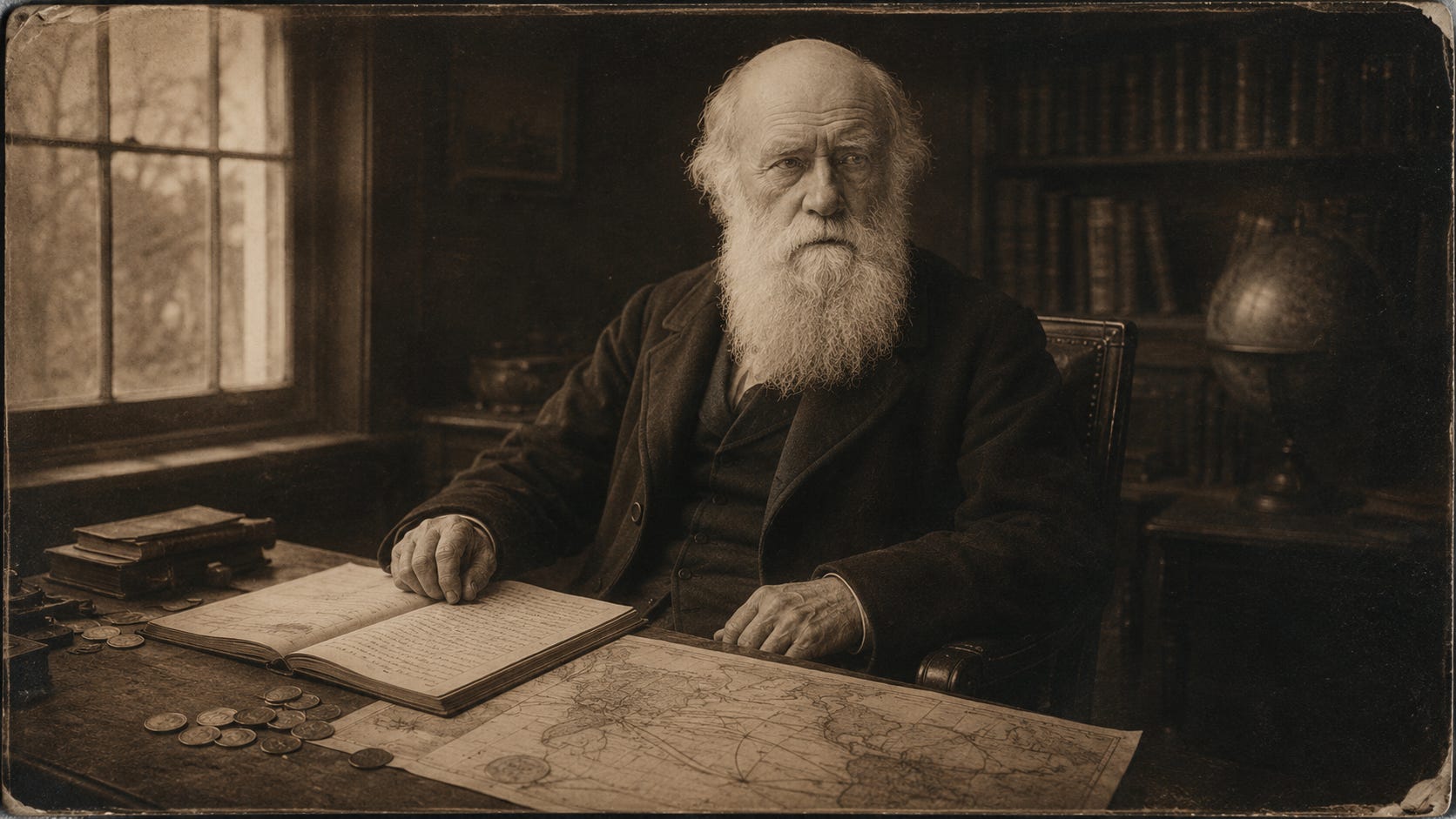
Charles Darwin ended On the Origin of Species with a line about “endless forms most beautiful.” He was wrong about the endless part, and the century and a half of biology that followed proved it. What the fossil record and the DNA evidence keep showing is not endless variation but the same small set of forms arriving again and again, in lineages that never touched. The camera eye, lens, and retina, and all, evolved separately in vertebrates and in octopuses, two lineages whose common ancestor had nothing of the kind. Flight evolved independently in insects, birds, bats, and pterosaurs, none of them borrowing from the others. Darwin saw the pattern. He had no idea yet how relentless it was.
His real insight was never about the finches. It was about recurrence: unrelated things, pressed by the same or similar constraints, keep bending toward the same answers. Biologists later gave it a name he never used, convergent evolution, the independent evolution of similar traits in species that are only distantly related, arrived at separately because they were solving the same problem. The name carries the whole idea. Separate paths incline toward one point because the point was fixed before any of them set out.
Believe it or not, marketplaces do this too. I made that case at length once before, in The Niche That Grew Its Organism, tracing the same skeleton through Aztec Tlatelolco, Tokugawa Japan, and the Hanseatic League, none of which had seen the others or swapped market best practices. The structure converges because the constraints on exchange are about as universal as gravity. Scarcity and the cost of energy force specialization, since no one can be the lowest-cost producer and the widest-reaching distributor at once. Friction, the accumulated cost of moving a good or a piece of information from where it is to where it is needed, demands a middleman whose entire job is to absorb that cost so the two ends do not have to. Information asymmetry creates a high ground, because whoever knows what is scarce can charge for the knowing, and a paying position that reliably exists is a position that something will always climb to occupy.
But convergence is a story about how a structure forms. It is silent on how long any piece of it survives. And that turns out to be the sharper question, because the pieces do not survive equally. Each layer in a marketplace carries its own private extinction event, a single condition that ends it, the way refrigeration ended the men who cut ice. The role feels permanent from the inside, right up until the condition arrives.
What are the five layers of a convergence market?

Every marketplace, like every ecosystem, that runs long enough sorts itself into the same roles. Producers make the thing. Consumers need the thing, whatever it is. Between them sit two jobs people usually collapse into one, though they pull in opposite directions. Aggregators concentrate: they pull scattered, small-batch supply into a single controllable pool. Distributors disperse: they take that concentrated supply and push it back out to wherever the need is. The Aztec pochteca did both in one body, gathering goods from dozens of villages and carrying them to distant cities. In a mature market, the two jobs are split and belong to different companies, each with distinct weaknesses.
Above them sits a financial layer that prices the movement and manufactures the trust two strangers need to transact. Beneath everything sits a decomposition layer, the recyclers, who turn failure and waste back into usable inputs. Five roles between the two ends, and the consumers they all serve. They appear whether the currency is cacao beans or dollars, whether the year is 1500 or now.
You can point at each one without leaving your own week. A farm or a factory is a producer, and so is the plant photosynthesizing at the base of a food web. Netflix is an aggregator, pooling scattered content into one library, the way a filter-feeding oyster pulls diffuse nutrients out of a whole bay. A retail store is a distributor, and so is Substack, which distributes newsletters to the readers who want them. A bank is the financial layer, and so is the fungal web under a forest that moves resources between trees. A pawn shop, a used-car lot, an electronics refurbisher, these are decomposers, and so is the literal fungus breaking a fallen log back into soil. The roles are older than the words we use for them.
If you want the argument for why these five keep recurring across isolated civilizations, it lives in the earlier piece. This one begins where that one stopped. Assume the convergence. Ask instead what kills each layer, one at a time.
Why do producers go extinct?
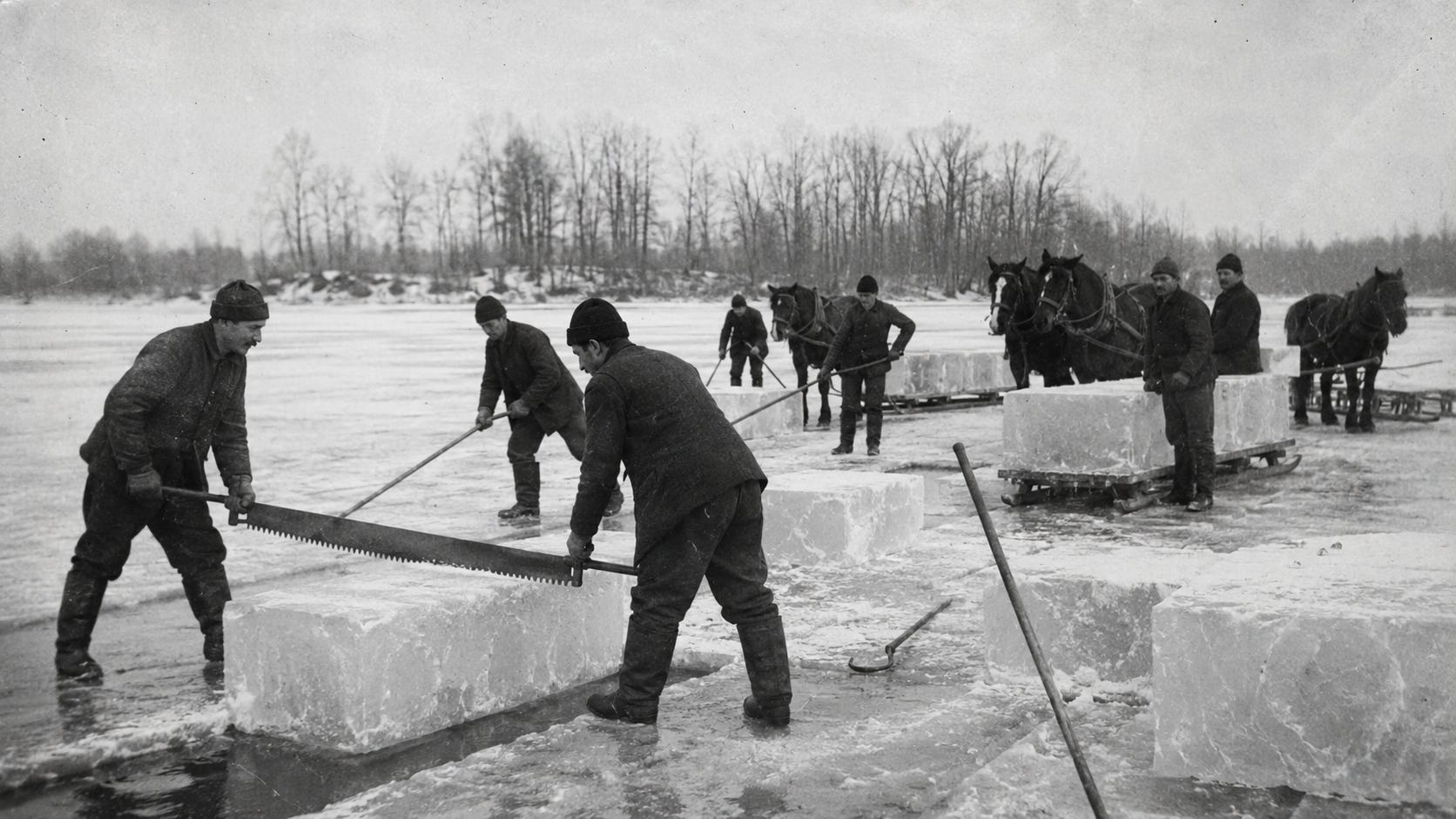
A producer almost never dies from another producer. It dies when the need it served gets met some other way.
Consider the men who cut ice. For most of the nineteenth century, harvesting frozen pond water was a serious industry. At its American peak, roughly 90,000 people and 25,000 horses worked the natural ice trade, sawing blocks out of New England lakes and shipping them down the eastern seaboard, to the Caribbean, to Europe, as far as Calcutta and Hong Kong. The trade was worth about $28 million in period money, close to $910 million in 2021 dollars, which put it in the same weight class as furniture manufacturing. A Boston firm shipped ice to India, and by 1833 someone in Calcutta ate the first ice cream ever made there, chilled with Massachusetts pond water.
Then a different kind of producer arrived on the scene: the mechanical refrigerator. The ice cutters did not lose a price war. They lost the reason anyone needed them. By 1914, factory-made ice had already edged past the natural harvest, 26 million tons to 24 million. After the First World War, cheap electric motors put cold inside the home, and the industry collapsed outright. In Chicago you can watch the curve bend: by 1950, more than ninety percent of households had a mechanical refrigerator, and within a decade the census stopped bothering to count who still bought ice.
Nobody built a better block of ice. A producer’s extinction comes from a substitute that erases the entire category, not from a sharper rival competing inside it. The ice men did everything right within the constraints they understood, and then the constraints moved out from under them.
Why do aggregators go extinct?
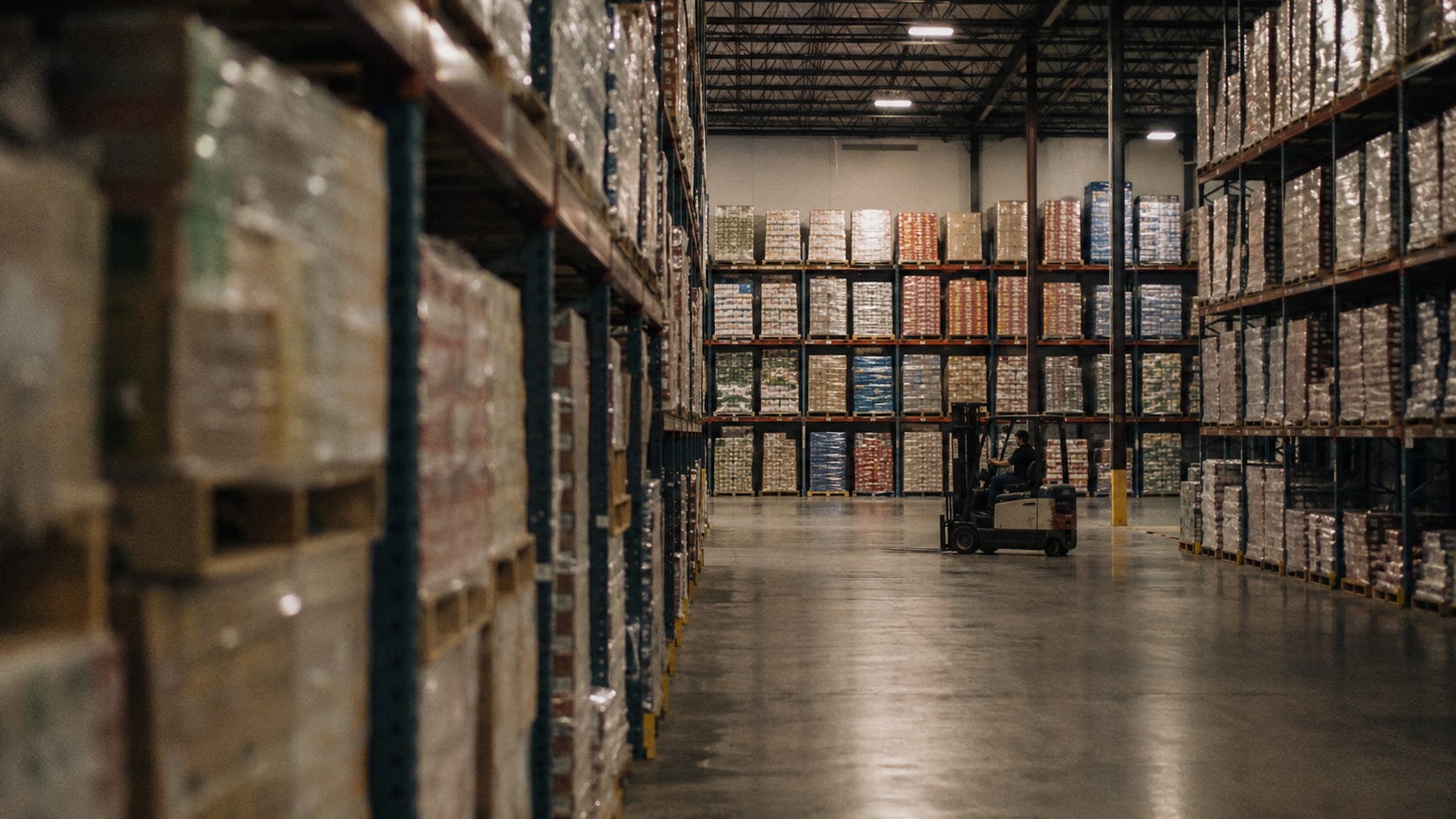
The middle of a market is the most profitable place to stand and the most exposed. Aggregators and distributors exist for one reason: the cost of not knowing where supply and demand are. When that cost is high, the middleman is indispensable. When it collapses, his job goes with it.
American wholesale distribution is enormous. A wholesaler is the operator who buys in bulk from manufacturers and resells to the retailers and businesses that serve the end customer, the professional middle of the supply chain. It is a $6 trillion business spread across more than 300,000 companies, six million workers, close to a quarter of GDP. It is also being hollowed out in slow motion. Industry growth ran at 16 percent in 2006 and had fallen to about 3 percent by the last time anyone measured it cleanly. The cause is a shift in what is scarce. The middleman’s core asset was always knowing which goods sit where, and that knowledge stopped being rare.
Watch it land on a specific company. Grainger sells industrial supplies, exactly the kind of distributor that thrived for a century on knowing its catalog better than any customer could. In 2017 it missed its earnings and blamed online price pressure, and its second-quarter profit came in more than 40 percent below the year before. Over the same stretch, the share of business buyers completing their purchases on distributor websites fell from 30 percent to 16 percent in two years, while nearly 40 percent were now closing transactions on Amazon instead. Buyers still wanted the goods. They no longer needed the guide.
Sometimes the producer runs the execution itself. In January 2018, Nike announced it would cut its distribution partners from around 30,000 down to 40 and sell direct through its own stores and apps, having done the math that direct margins ran near 62 percent against 38 percent through wholesale. That is a producer reaching down and strangling its own aggregator layer on purpose, because the friction the layer used to absorb had gotten cheap enough to handle in-house.
I have spent over fifteen years in retail and category management, studying producers, distributors, and aggregators from the inside and the outside, and what took me too long to see is that the distributor’s real product was never the product. It was the knowing. When I sat in a category review, the supplier who survived the reset was rarely the one with the lowest cost. It was the one who knew something about the shelf that we didn’t. The moment a platform can see the whole shelf at once, that knowledge stops being worth paying for, and every role built on it starts to die.
Why does the financial layer go extinct?

Money is the layer people assume is permanent, and it is the one that turns over most violently.
A financial layer does not exist to hold value. It exists to build trust between people who have no reason to trust one another. That is the product: a stranger in one city agreeing to hand over goods to a stranger in another because a third party stands behind the promise.
A few years ago, I worked at eBay Corporate, on a small team helping launch eBay Refurbished. The platform had millions of sellers and plenty of buyers who did not trust a random seller to sell a working laptop. So we built the trust the buyers were missing: standards sellers had to meet, guardrails they had to clear, and preferential placement for the ones we had vetted. We were not moving product. We were manufacturing the confidence that let the product move at all, because we knew that the moment a buyer trusted the transaction, the sale followed.
Merchants were solving this a very long time ago. Letters of credit circulated in Mauryan India and Qin China. Roman traders used pre-written payment orders backed by financial agents called argentarii. Each of these answered the same question: how do I trust you enough to trade, and each answer eventually died as a cheaper one grew up beneath it.
Here, the biological metaphor turns literal. Under a forest floor runs a web of fungal threads connecting the roots of separate trees, moving carbon, nitrogen, and water between them, letting a tree with a surplus feed a seedling in the shade. Ecologists nicknamed it the wood wide web, and it works, more or less, as a decentralized system for shifting resources to where they are needed among organisms that never directly touch.
I want to be cautious because the popular version tends to exaggerate it. Many of the strongest claims about how much trees share and how deliberately they do so are contested and thinly evidenced. But the core holds, and the core is the point. A financial layer is that fungal web. It is the underground trust network that lets disconnected parties send value to one another. And like the fungal web, it does not get outcompeted on price so much as starved when a different network grows into its place.
You can date one of these extinctions. For two centuries, the great fairs of Champagne were the clearinghouse of European credit, the place where debts from across the continent were settled and rolled over. Then, in the fourteenth century, they faded because trade found a permanent home in cities, and the banking houses there, the Medici among them, with their seven branches and their double-entry books, absorbed the functions the fairs used to perform. The customers stayed. What moved somewhere cheaper was the reason they had needed the network at all.
Cacao beans, letters of credit, card networks, stablecoins: if you drew a straight line through those, you would not be drawing an upgrade path. You would be drawing four separate extinctions, each trust mechanism starved out by the next.
Why do decomposers go extinct?
The least glamorous layer, and the most forgotten, is the one that recovers waste. Most people assume it only ever expands, that recovery can only grow as we throw more away. It doesn’t. It has an extinction condition like all the others, and in at least one large market that condition has already arrived.
You already know the decomposers even if you never call them that. Pawn shops pull value back out of the things people give up on. Used-car lots keep a machine circulating through three or four owners past its first sale. The same eBay Refurbished work I described earlier was decomposition as much as it was trust-building, our other job was writing the standards that sent used electronics back into the market at a quality a new buyer would accept, instead of into a landfill. A refurbisher is a fungus with a warehouse.
Edo-period Japan (roughly 1603 to 1868) ran one of the most complete recovery systems in history. Specialized buyers collected candle-wax drippings, wood ash, human hair, and worn paper umbrellas, and repair peddlers circulated through neighborhoods patching pots and re-soling clogs. Almost nothing left the loop, because in a closed material economy every scrap held value and someone made a living recovering it. The decomposition layer thrives on exactly that: waste worth more recovered than discarded.
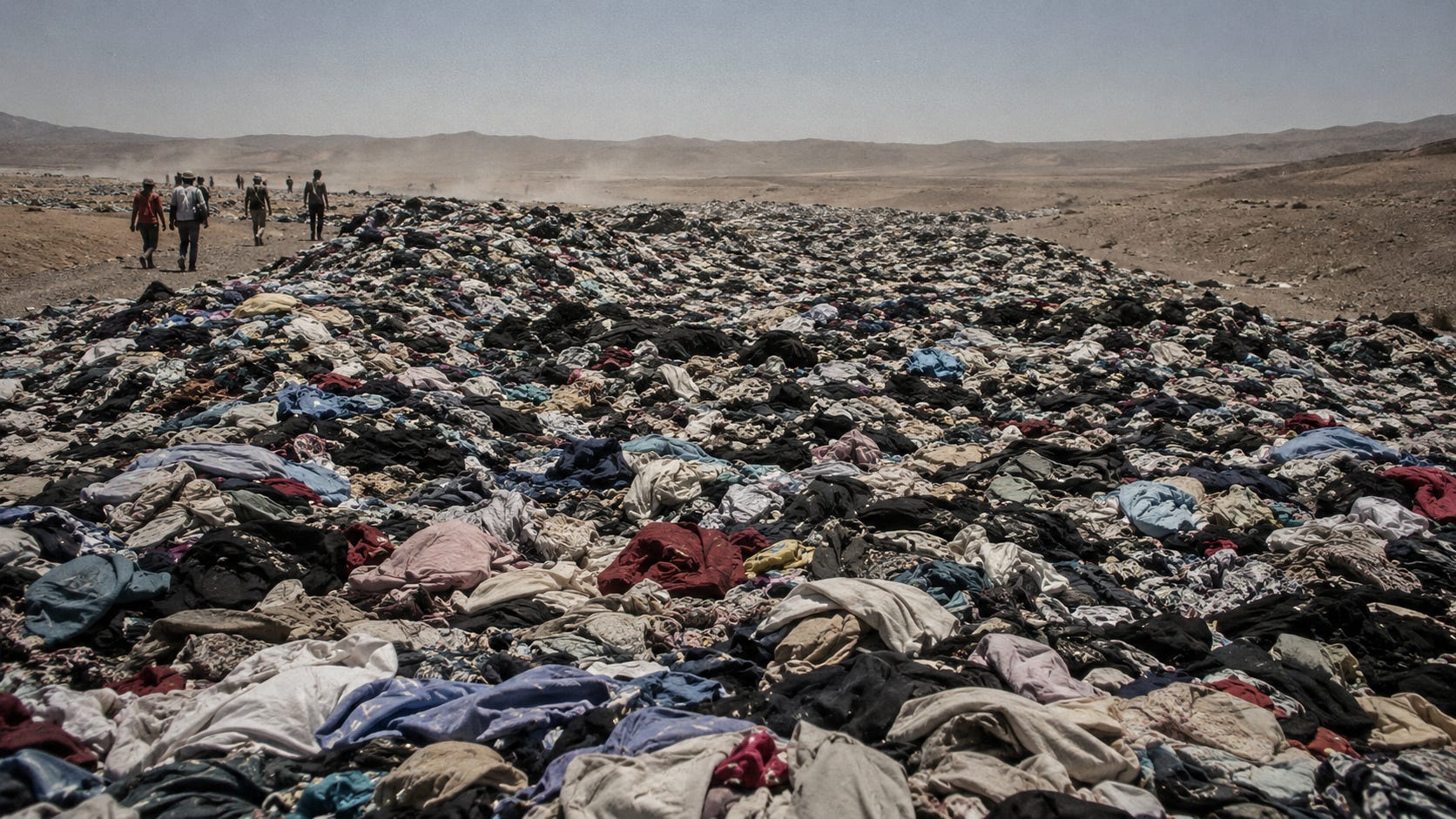
Now watch it fail. American textile recycling recovered around 30 percent of discarded clothing from the 1960s through the 1990s. Today that rate sits below 16 percent, and the share of old clothes turned back into new clothes is under one percent. It is getting worse on a timer: recycled polyester was about 14 percent of all polyester used in clothing in 2019 and is projected to fall under 8 percent by 2030. The recovery layer for an entire industry is contracting while the waste stream explodes, from 11 million tons of American textile waste in 2005 to 17 million by 2018.
The extinction condition is simple and grim. When virgin material gets cheap enough, recovery stops being worth the labor. A kilogram of new fabric is so cheap to produce that sorting, cleaning, and reprocessing a used garment costs more than making a new one, so the loop breaks and the waste rides a container to a landfill in the Atacama or a wetland in Ghana. Plastic tells the same story: recycled resin has to compete with virgin plastic pressed straight from cheap oil, and when the oil is cheap enough the recycled version loses on cost every time, which is why so much of what goes in the blue bin gets landfilled anyway. The recyclers stayed exactly as diligent as before. The math that sustained them simply inverted.
I will complicate my own point, because the story has a second edge. Some people inside the trade argue the whole waste narrative is overstated, pushed by fast fashion companies with an interest in making secondhand look like garbage. One researcher found only 8 to 12 percent of unsorted used clothing is unwearable. If that is right, the decomposition layer is not dying so much as being told it is dead by the producers who would rather you buy new. Which would make this not an extinction at all, but a killing. I cannot cleanly settle which it is, and I am no longer sure the two are as different as they sound.
What happens when a layer goes extinct?
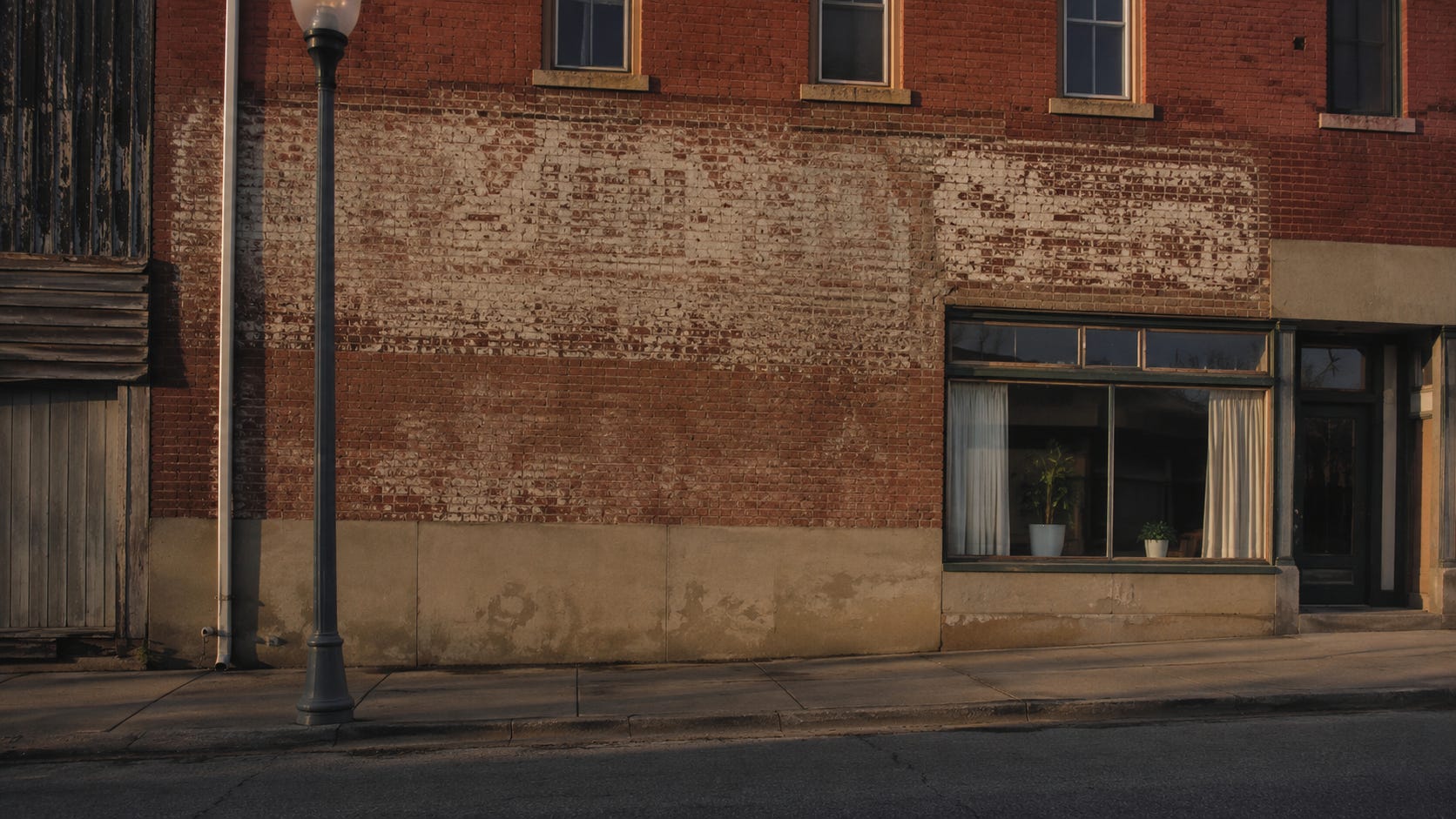
Here is the bothersome part. When a layer dies, its niche does not close. The work still needs doing. The demand that created the role remains. So the niche typically gets inherited.
Usually, the inheritor is an adjacent layer that extends to fill the vacancy. Nike absorbing its own distributors. City banks absorbing the fairs. Sometimes, at platform scale, a single organism absorbs several layers at once and becomes the market itself rather than a participant in it, the way a beaver’s dam or a coral reef stops being a resident of the habitat and turns into the habitat. That is the ecosystem-engineer argument I made in my earlier Niche essay, so I will leave it there.
What matters is the moment of transfer. An extinction event is precisely when a player stops competing inside a layer and starts owning the niche the layer used to occupy. The ice company that pivoted to selling refrigerators. Amazon turning the distributor’s dead function into fulfillment it rents back to you.
This is why “which layer am I in” is a shallow question. The layer feels solid. It pays the mortgage. The ice cutter in 1890 held the strongest possible position inside a doomed category. The deeper question is the one the pochteca, the ice man, and the Champagne banker never got to ask in time.
So ask it. Of the five roles, which one is your work closest to, and what is the extinction condition for that role? The question is not whether a competitor might out-execute you. It is whether the constraint that makes your role necessary is about to get cheap. The producer watches for the substitute that deletes the need. The aggregator watches for the friction to collapse. The financial layer watches for a cheaper way to manufacture trust. The recycler watches the price of virgin material.
And whichever one you are in, someone in the layer next to yours is already running the numbers on whether it is cheaper to inherit your job than to keep paying you for it.
FAQ
Is a layer extinction the same as disruption? They come from different places. Disruption usually means a competitor doing your job better or cheaper. A layer extinction means the condition that made your job exist stopped holding, so the role dissolves regardless of how well you performed it. The ice trade was not beaten by a superior ice company. Its reason to exist was removed.
Can an extinct layer come back? Only if its extinction condition reverses. A decomposition layer that died because virgin material was cheap can revive if raw materials get expensive again, or if regulation puts a price on waste, which is what extended-producer-responsibility laws are attempting. The role returns when the underlying constraint returns, not out of nostalgia.
Which layer is most exposed right now? The aggregators, because their whole function is absorbing an information cost that software keeps driving toward zero. Any role whose value reduces to “I know where things are and you don’t” is living on borrowed time in a world of searchable inventory. The financial layer sits close behind, for the same reason applied to trust rather than location.
Excellent discussion of the ice biz, which is usually misunderstood. I did an animated feature on it and learned how it really worked. The ice man lasted longer than he "should" have, partly because houses were built for home delivery of ice, groceries, laundry, coal,, etc, and each type of delivery helped to maintain the others.
https://polistrasmill.com/2022/12/01/the-ice-industry-part-1-5/
Dude this is unbelievably thorough and articulate.
Did you come up with this all by yourself from scratch or were you building on an existing set of structures and systems that are used to explain the various roles that players take in each market and how economic value is created through the diversity of roles, functions and offerings within the ecosystem it exists inside of?
What I loved most about this article was how you incorporated a lot of super astute systems thinking across the entire ecosystem and all its interlinking parts and how they play together
It’s almost hard to believe that someone hasn’t already decoded this in some way when you put it so clearly
I think that’s a sign of a very sound theory that makes a tremendous amount of sense
It also inspires me to think even more holistically than I already do about the larger ecosystem I operate inside of and the various constraints and asymmetries that exist and how that overlays with game theory (which I’ve already done but this gives me some new things to consider so thank you)
Also: in reading this, I’m also inspired to work on publishing my own magnum opus that I’ve been working on for the last 18 years within my field as I’ve crystallized it into being in an equally intricate way and I think it’ll be a really big guiding light to a lot of people once I put it out there.
Thanks for doing the work to put this out there
And really cool to discover that you already followed me on here somehow even though I don’t think I’ve posted anything. Perhaps it was a shared interests chat.
In any case, I am very happy that this popped up in my newsfeed today and I wish you great fortune and blessings in all your endeavors.
Much love,
Kevin