
The Tollbooth Returns
How platforms, states, and empires learned to make you pay the same toll

TLDR:
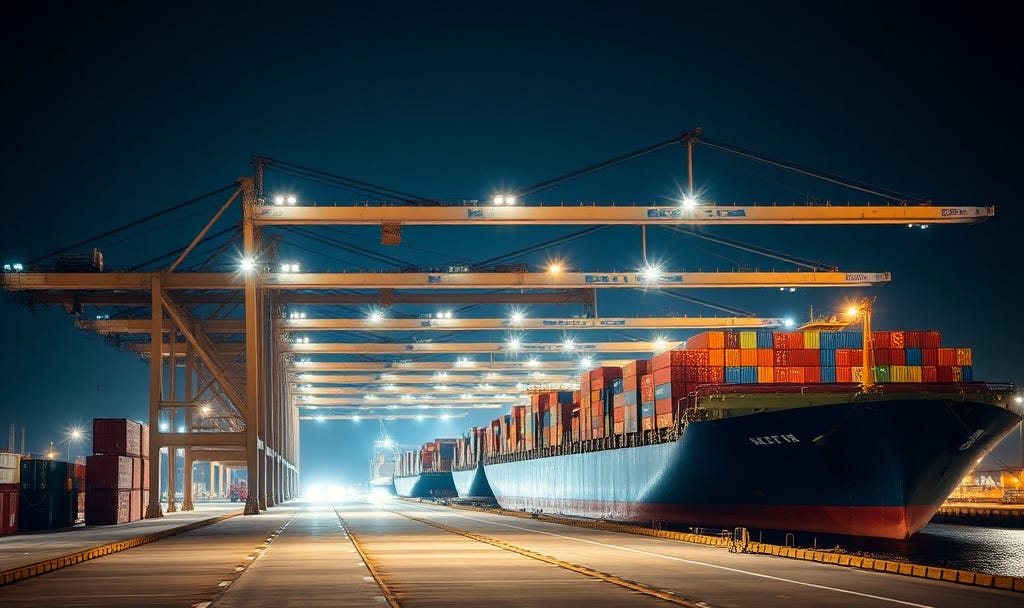
This essay applies the Market River Theory to the global economy: friction never disappears — it relocates, and whoever controls the relocation point collects the rent. The period from 1989 to 2016 did not eliminate tollbooths. It moved them to places the beneficiaries of the system didn't have to see.
Since 2016, new tollbooths are being installed across energy, semiconductors, identity infrastructure, and climate policy — always one layer upstream of where the previous generation of observers expected them. The human cost of this system — the entropy tax — falls most heavily on people with the least time, capital, and leverage. Flows never stop. They reroute, with different tolls, owned by different actors.
How Globalization Chose Its Winners
The period from roughly 1989 to 2016 went by many names: the Washington Consensus, globalization, liberalization, the unipolar moment.
What they all described was pretty much the same thing — borders opening, trade expanding, capital moving faster than anyone had seen. The memory is partly accurate and deeply misleading. The period reduced friction selectively, and the selections reveal who was in charge. What it was, in practice, was a set of choices about whose friction would fall first.
Trade friction fell for finished goods. It did not fall for labor. A container of electronics could cross six borders with minimal friction, while a worker attempting the same crossing faced walls, biometric systems, and years of administrative processing. The North American Free Trade Agreement is the clearest case: between 1994 and 2010, U.S.-Mexico trade tripled. The friction on finished goods fell substantially. The friction on Mexican workers who wanted to follow those goods north did not. NAFTA came with a labor side agreement that was explicitly designed to have no enforcement mechanism. The goods got the treaty. The workers got the footnote. (The agreement contained the phrase "best efforts" — trade negotiator for "we mean well and also goodbye" — as its primary enforcement standard. Labor advocates called it toothless from day one.)
Legal pathways existed on paper — the H-2A and H-2B visa programs allowed Mexican workers into the US for agricultural and seasonal work — but they were employer-sponsored, temporary, and capped. Workers had no portability, were tied to a single employer, and had no leverage to leave. The application process was expensive enough that many employers didn’t bother, turning instead to undocumented labor. The legal pathway wasn’t a relief valve. It was engineered to function as friction. Border enforcement spending increased tenfold in the same period. The goods flowed freely. The people who made them could not.
The EU is the obvious counterexample. It did extend labor mobility across member states — a genuine reduction in friction for workers holding the right passport.
But the operative phrase is “the right passport.” Freedom of movement inside the bloc coexisted with some of the most fortified external borders in the world. A Polish worker could move to Germany freely. A Moroccan worker attempting the same journey paid in years of administrative processing, detention, and risk. And even inside the circle, the friction didn’t disappear — it changed form. Romanian workers in Germany are technically free to be there. But the housing market charges them differently, the credentialing system doesn’t recognize what they earned at home, and the political climate in several member states has made their presence a campaign issue. The EU didn’t solve the labor friction problem. It drew a smaller circle, called it freedom, and installed new tollbooths inside it.
The pattern didn’t end with physical borders. A graphic designer in Buenos Aires doing identical work to one in Austin gets paid through a platform that takes twenty percent, converts at a punishing exchange rate, and ranks her lower in search results because her reviews are in Spanish. The border became invisible.
Capital friction fell for institutional investors moving billions across jurisdictions overnight. It did not fall for migrant workers sending remittances home, who paid among the highest per-dollar fees in retail finance — and still do on many corridors, even after Wise and Remitly drove costs down on the high-volume routes. The apps solved the profitable version of the remittance problem. The expensive friction stayed exactly where it was for everyone without leverage. The woman sending eight percent of her paycheck home on a corridor that Wise doesn’t serve yet is not a footnote to this history. She is its most accurate measure.
The tollbooths of the period did not disappear. They were relocated to places the beneficiaries of the system did not have to see. The dollar was the first one. The dollar-denominated trade system, collected by a single state through the privilege of issuing the reserve currency. (The polite term for this arrangement is “exorbitant privilege.” The accurate term is rent, collected at the routing layer of global trade.)
The open internet was the same story, though it took longer to see.
The early internet was genuinely open infrastructure — protocols nobody owned, publishing nobody controlled, search nobody monetized. (Anyone remember when Google was just a white page with a search bar and no ads? When the internet was something you waited fourteen seconds to connect to, and the waiting felt worth it because what was on the other side felt genuinely free?)
That lasted roughly a decade. By the mid-2000s, the routing layer had been captured. Google sat between users and information. Facebook sat between users and each other. Amazon sat between buyers and sellers. Each built its tollbooth at the point where the most traffic had to pass through, then optimized the collection mechanism over two decades until the tolls were invisible — paid in attention, data, and the margin compression of every seller who had no alternative route to market. Ultimately, the open internet became private infrastructure. (Three companies now sit between most of humanity and most of the internet. One of them will also deliver toilet paper to your door in two hours. The routing layer and the supply chain, privately administered, by the same people.)
And then there was SWIFT.
The SWIFT network is the messaging system that lets banks talk to each other across borders — the invisible plumbing behind every international wire transfer, every cross-border payment, every time money moves between countries. Most people have never heard of it. Every bank in the world depends on it. It was a tollbooth too — legible as neutral infrastructure until the moment it was used as a weapon against Russia and Iran, at which point its nature as a chokepoint became visible.
When the US and EU removed Russia from SWIFT in February 2022, the immediate effect was visible: Russian banks couldn’t process international payments, exporters couldn’t receive dollars, importers couldn’t pay suppliers. The ruble lost thirty percent of its value in days. But the response was equally instructive. Russia accelerated SPFS, its domestic messaging alternative, and expanded Mir, its payment card network, into Central Asia and the Middle East. Iran, cut off from SWIFT years earlier, had already built workarounds through informal hawala networks — value-transfer systems that move money across borders without actually crossing them — and bilateral barter arrangements with trading partners. Both built smaller rivers with their own tollbooths. The weapon worked as punishment. Control required something the weapon couldn’t deliver — compliance.
What the period called globalization was a specific architecture, not the absence of one. When observers now describe that architecture as ending, they are often describing something narrower. The beneficiaries are changing, and the tollbooths are being moved.
How Governments Learned to Build Tollbooths Again
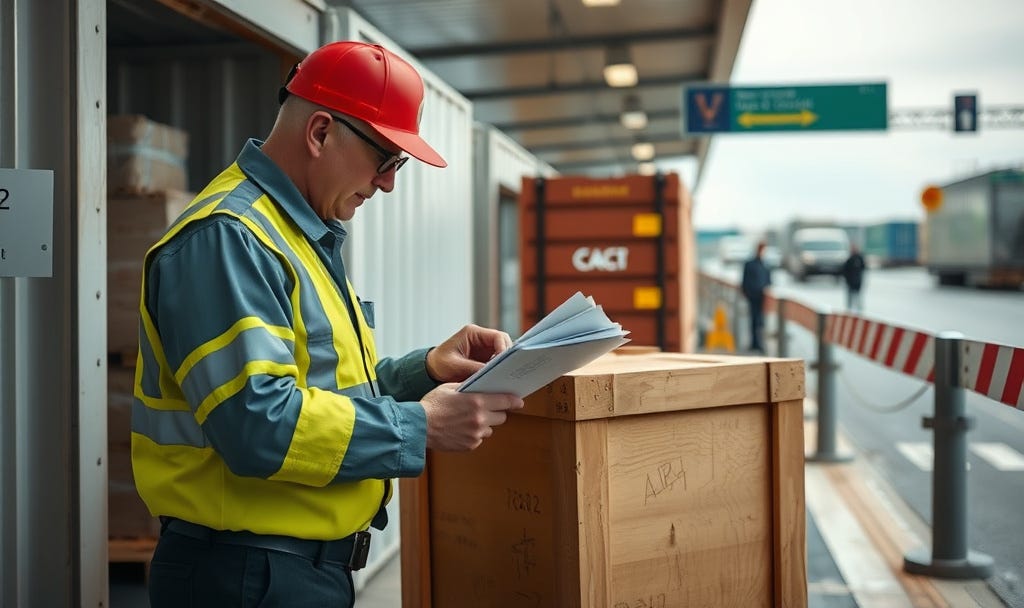
Since roughly 2016, the tollbooths have been coming back — just wearing different clothes.
Governments began restricting which countries could buy which technologies.
They started requiring that data stay within national borders — China told every foreign tech company operating there that the data its users generated had to live on Chinese servers, and other countries are now copying the template. Europe started taxing imports based on how much carbon was emitted making them, which sounds like climate policy and functions like a border tax. The US extended its sanctions reach so far that banks in third countries now get punished for doing business with the wrong people. And governments started subsidizing factories to keep them inside friendly borders rather than let them follow cheaper labor elsewhere.
None of these look like the old tollbooths, yet all of them work the same way.
Henry Farrell is a political scientist at Johns Hopkins. Abraham Newman is his counterpart at Georgetown. Together, they coined the term ‘weaponized interdependence.’
When countries get deeply connected through banking systems, supply chains, and cloud infrastructure, the most powerful ones can use that connectedness as a weapon: cut someone off from the global banking system and you’ve got leverage without firing a shot. The frame is useful and largely correct about the cases it examines.
And in some cases, it’s simply the better explanation: when the US kicked Russia out of SWIFT in 2022, it was a dominant actor using a chokepoint against a specific target. China did the same thing on the supply side — when Washington started restricting chip exports, Beijing responded by imposing export controls on gallium, germanium, and several critical minerals, materials that sit upstream of almost every advanced semiconductor made anywhere in the world. No license, no material. No material, no chip. Weaponized interdependence explains both moves well.
But the frame broke down on the second move. The October 2022 chip export controls started the same way — unilateral US action, targeted at China, a dominant-power tollbooth exactly as described.
But within eighteen months, the Netherlands had restricted ASML’s EUV shipments, Japan had added its own controls on semiconductor equipment, and the EU was developing its own framework. The dominant-power frame predicted the first move. It didn’t predict the cascade. What followed wasn’t compliance — it was competitive tollbooth installation by actors who weren’t the original hegemon and had their own reasons for wanting a chokepoint in the chain.
That’s a different phenomenon, and it’s what my Market River Theory is built to describe: friction as a property of the system itself, with many actors competing over who installs and collects, including actors not traditionally understood as setting geopolitical terms.
The next question is where the tollbooths land. And the answer follows a consistent pattern: they never install at the visible point of the flow. They move upstream, to the layer where substitution is hardest and routing around is most expensive. Every dominant platform figured this out before any state did.
The New Tollbooths: Energy, Chips, Identity, and Climate
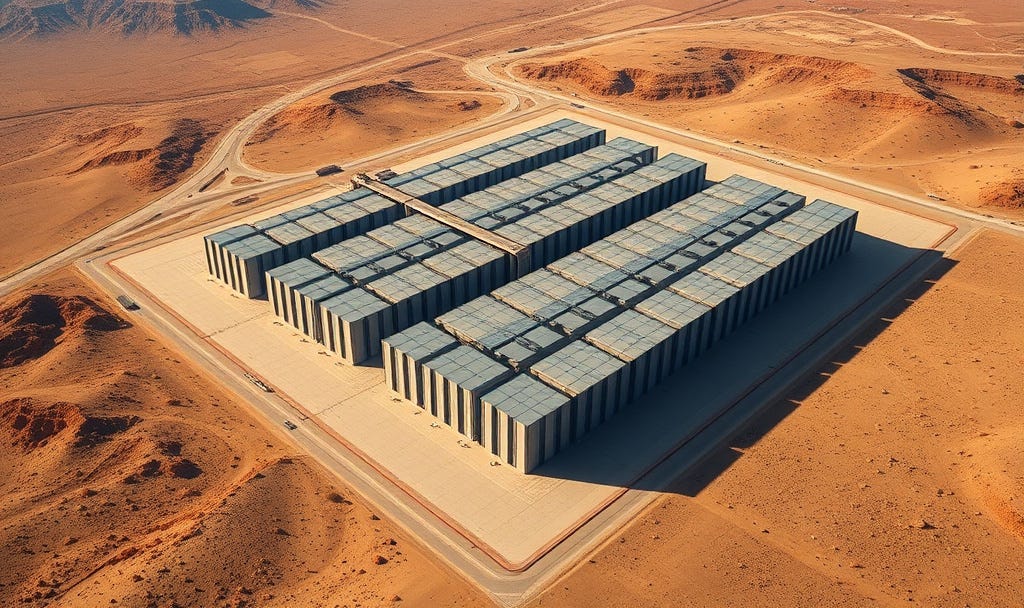
The question isn’t whether new tollbooths are being installed. That’s settled. The question is where — and the pattern is always the same. The tollbooth never goes where you’re looking. It goes one layer upstream, to the point where if you control it, nobody can route around you.
Amazon figured this out before any government did. It doesn’t just charge you to sell on its platform. It charges you for the warehouse, the shipping, the advertising, and the data. Each layer upstream is harder to escape than the last. Some states are now running the same playbook — China has been doing it for years with data localization and platform regulation, the EU figured it out around 2018 when it started fining Google, and India built it into the UPI architecture from the beginning. The US, characteristically, is still arguing about whether to do anything at all. (It took the EU fifteen years to catch Amazon. Washington is still drafting the committee.)
Energy is the clearest case.
AI needs enormous amounts of electricity — more than most countries anticipated, more than most grids can currently provide. Whoever has cheap, reliable power becomes the place where AI gets built. And wherever AI gets built is where the economic gravity of the next decade concentrates. The tollbooth isn’t on the AI itself, which can be built anywhere. It’s on the power the AI requires, which can’t. The Gulf states have cheap energy and sovereign capital and are positioning hard for this role. Texas benefits domestically for the same reason. Europe made political decisions over the last decade that made its energy expensive, and now the AI buildout is quietly routing around them. Nobody announced this. The flows just went elsewhere.
Semiconductors show how far upstream a tollbooth can travel.
The US started by restricting chip exports to China. Then it restricted the machines that make chips. Then the materials that go into the machines. Each move went one layer deeper — closer to the root of the supply chain where substitution becomes impossible. The same logic is now being applied to biotech equipment, quantum components, and AI software. The people designing these restrictions understand exactly what they’re doing. They are building well.
Identity is the quietest tollbooth installation of the decade.
Whoever controls how you prove who you are online — Apple, Google, your government, your bank — controls the entry point to every digital transaction for the next twenty years. This fight is happening in technical standards bodies and regulatory proceedings, not in headlines, which is how the most important infrastructure decisions usually get made.
Nobody campaigns on payment rail architecture. And yet. India already built the template. The government created a payments system, made it the mandatory plumbing for the entire country, and now Visa, Mastercard, and PayPal all route through it on terms the Reserve Bank of India sets. The tollbooth there isn’t a fee. It’s regulatory control over who gets to participate — which is a more durable form of toll than any percentage point. Every government and platform watching India understands this. They are all building their version.
Climate policy is becoming trade policy under a different name.
The EU created a carbon border tax — if you make something in a country with loose environmental rules and try to sell it in Europe, you pay a fee at the border. It’s marketed as climate action. It functions as industrial protection. India and Brazil have already complained at the WTO, which tells you the mechanism is working exactly as a tollbooth should. Every major economy will eventually copy it, because it’s nearly impossible to argue against publicly without appearing to oppose climate action entirely. Elegant design, honestly. Infuriating if you’re on the receiving end.
The Hidden Cost of Friction: Who Bears the Entropy Tax
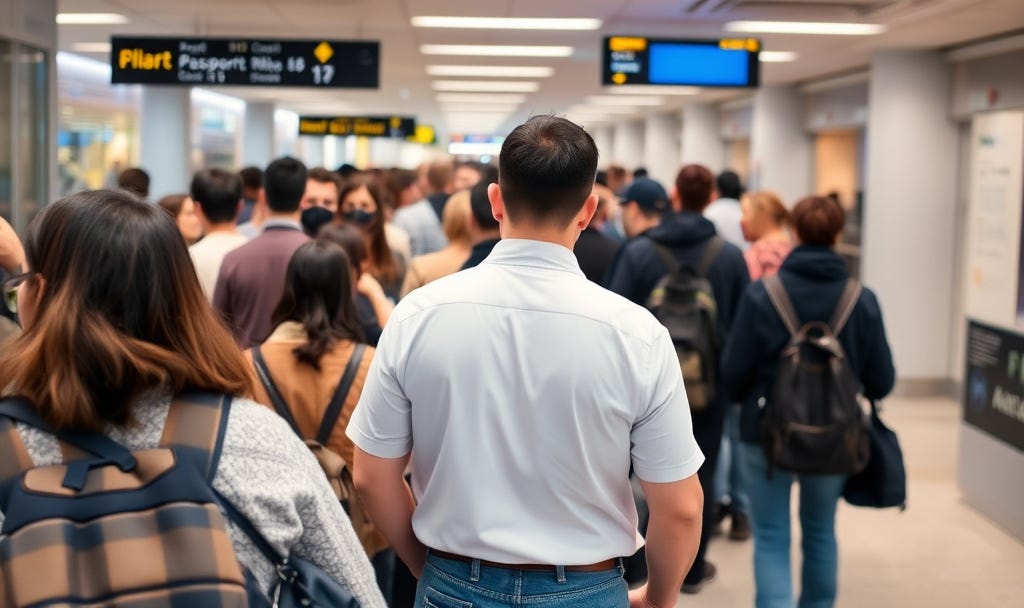
There is a person who pays all of this. Not the state, not the platform — the person.
She is the same woman from the remittance corridor, now sorting through narrower options at a supermarket whose category mix shifted three months ago for reasons no one explained to her. She holds a passport issued by a country that lost the friction war. And she navigates — daily — cancellation flows, dispute processes, and authentication walls designed by teams whose bonuses are tied to preventing her from completing the action she came to complete. (Amazon’s internal name for one such flow was reportedly “Iliad.” As in: an epic journey, but not the kind you’d choose.)
None of this shows up as a cost in any ledger. It shows up in her life as exhaustion.
At the platform scale, this cost is regressive. The people with the least time and capital pay the most. Heavily.
At the geopolitical scale, the same tax operates, but on a larger scale. Citizens of states that lose the friction wars pay higher prices for imported goods, face longer border queues, and have weaker passports that limit where they can travel and work. Within states, people with capital and credentials route around the new frictions — dual citizenships, offshore structures, institutional access — while the people without either pay the full toll. Between states, countries with size and optionality extract more from those without.
The populist energies of the coming decade will be an apparent response to this tax, even when the people paying it cannot name the mechanism.
The intuition that something is being extracted from us by systems we did not design is accurate. The frustration with elites who seem to route around the systems that discipline everyone else is accurate. The difficulty lies in identifying succinctly what is happening with enough precision to act on it, and most political movements will fail this test.
Left populism blames the corporations and the billionaires. Right populism blames the immigrants and the bureaucrats. Both point to real symptoms of the same mechanism and treat the other side’s target as the cause. Neither side, currently, has a theory of friction sophisticated enough to address the mechanism rather than its symptoms — and so the argument between them generates heat without producing light, decade after decade, while the tollbooths keep getting built.
The frame predicts one thing only: any politics that does not address the entropy tax will lose ground to one that does, and the politics that successfully names the tax without prescribing a workable response will generate most of the political energy of the period without resolving any of it.
Russia offers the clearest evidence that none of this resolves.
After being cut off from SWIFT in 2022, Russia did not collapse and did not return to its chosen behavior. It built SPFS, its own financial messaging system, and Mir, its own payment card network, and is now integrating both with China’s CIPS and with the equivalents of partner countries. The parallel infrastructure is slower, less global, and less efficient than what Russia was excluded from. It is also operational, growing, and outside the reach of the original tollbooth. The country that was denied access to the dominant river built a smaller one, with its own tollbooths, owned by a different set of actors.
That is the proof of concept. Deny the flow, and the flow finds another channel. The tollbooth moves. The rent continues.
And that is what the rivers do. Water finds its level regardless of what states attempt, which is why every effort to end trade, end migration, end the movement of capital, or end the flow of information has failed and will fail. Flows continue under different names, through different channels, with different tolls attached. The architecture changes. The underlying movement continues.
The question of who drinks from the river, who pays to cross it, and who stands on the banks collecting tolls is older than any particular political settlement. The post-Cold War arrangement answered the question one way, and that arrangement is ending. What replaces it is being decided now — in standards bodies, regulatory agencies, boardrooms, and military procurement offices, by people who may or may not know that the decisions will shape the next century.
Tolls are already being collected from everyone. The only question is which ones, and by whom, and whether the collection is visible enough to argue with.
FAQ
What is the Market River Theory and how does it explain global trade?
Market River Theory is a framework for understanding how flows of goods, capital, information, and people behave when friction is applied to them. The core claim: friction never disappears. It relocates. Whoever controls the relocation point collects rent from every actor who needs to pass through. The theory applies equally to platform economics and geopolitics because the underlying mechanism is identical — the scale just changes. A retailer moving its fee from the transaction layer to the data layer is running the same play as a government moving its control from finished goods to upstream materials.
What is the entropy tax, and who pays it?
The entropy tax is the aggregate cost of engineered friction borne by people who lack the leverage to avoid it. At the platform level it shows up as dark patterns, cancellation flows, and authentication walls. At the geopolitical level it shows up as higher import prices, limited passport mobility, and degraded public services in countries that lose the friction wars. It is regressive by design — the people with the least time and capital pay it most heavily — and it almost never appears as a named cost in any ledger. It shows up instead as economic data labeled friction, and in individual lives as exhaustion.
Why does friction relocate instead of disappear when markets or governments try to remove it?
Because flows — of money, goods, information, people — follow the path of least resistance. When friction is removed at one point in a system, flows accelerate through that point until a new chokepoint forms downstream, or until an actor with leverage installs a new tollbooth upstream. This is as true of platform economics as it is of geopolitics. The actors who understand this install their tollbooths early, at the layer where substitution is hardest. The actors who don’t end up paying rent to whoever got there first. The globalization era is the clearest historical example: friction on goods fell, friction on labor stayed exactly where it was, and the people who benefited most were the ones who owned the goods and not the ones who made them.
This is a very useful frame.
Every technology uses physical resources. Every industrial wave did that. What feels different now is that AI creates a new layer of demand on resources that are already politically, environmentally, and socially stressed: power, water, minerals, land, grid capacity, cooling, and local permission.
The value may accrue to hyperscalers, investors, enterprises, and AI users, while the burden may fall on local communities, energy systems, public infrastructure, water systems, or future generations.
That is why entropy tax thinking matters. If something is scarce, irreversible, or socially costly, pricing it properly can force better questions.
Should the community hosting the burden receive direct benefit?
Should there be limits, conditions, or compensating investment?
Should the full cost be visible before deployment decisions are made?
For me, entropy tax is a visibility mechanism. But visibility alone is not enough. Governance decides what is acceptable, and under which conditions. Social permission ensures the people carrying the burden are not treated as invisible.
That is where the idea becomes more interesting to me: moving from entropy tax as economics to entropy governance as the missing safety layer between economic value creation and social welfare.
The woman "sending eight percent of her paycheck home on a corridor that Wise doesn't serve yet" stayed with me. What this quietly reveals is that the entropy tax isn't only financial. It's cognitive, and the people fighting "authentication walls" all day are spending the exact attention they'd need to escape.